
 There are two kinds of holiday readers: those who finally escape family law completely … and those who somehow end up reading novels that make them think about mediation, parenting and relationships anyway.
If you’re in the second camp, this list is for you. Whether you’re reading on a sun lounger, in the garden after work or with a coffee on an August afternoon, summer is the perfect time to pick up a novel that makes you think differently.
These are four novels that stayed withme long after I turned the final page.
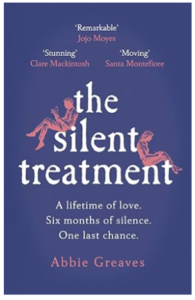 The Silent Treatment by Abbie Greaves
The first, Abbie Greaves’ debut novel, The Silent Treatment, is not a book about divorce, mediation or family law! However, it is a book that many of us who work in that field will find both compelling and uncomfortable reading.
Frank and Maggie have been married for forty years, yet Frank has not spoken to his wife for six months. When Maggie is admitted to hospital following an apparent overdose, Frank finally begins to tell their story and explain how two people who clearly love each other arrived at such a devastating impasse.
Why read it?
This book is a powerful reminder that relationship breakdown rarely occurs because of a single event. Instead, Abbie looks at how misunderstandings, assumptions, grief, unspoken fears and avoidance can accumulate over decades until communication collapses altogether. Sounds familiar!
For me, the novel demonstrates over and over that conflict is often sustained not by an absence of love, but by the decline in meaningful communication.
I couldn’t help but ask myself ‘could Frank and Maggie’s story have been different if they had sought support earlier?’
Throughout the book, there are numerous moments where a mediator, relationship counsellor or therapeutic professional might have helped the couple. We could have explored assumptions and misunderstandings in a safe space. Either to prevent the inevitable or to help them move forward afterwards.
I particularly liked the portrayal of emotional vulnerability and mental health difficulties. Without revealing key plot developments, the novel explores the lasting impact of loss, shame, family history and depression.
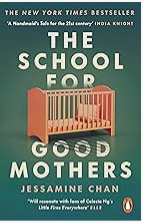
The School for Good Mothers by Jessamine Chan
I loved The School for Good Mothers – it’s one of the most thought-provoking novels I’ve read recently.
At first glance, it is a dystopian novel. But it is also a powerful exploration of parental scrutiny, state intervention, child protection, gender expectations and the question that we often deal with:
How do we distinguish between a parent who has made a mistake and a parent who presents an ongoing risk to their child?
Why read it?
Frida Liu is a struggling single mother who makes what she later describes as a terrible mistake. Following this lapse in judgment, her daughter is removed from her care and Frida is sent to a government-run institution designed to teach “bad mothers” how to become good ones. There, every aspect of her parenting is monitored, measured and scored.
There are so many parallels for family practitioners, because we routinely encounter questions about parental capacity, safeguarding, the proportionality of intervention, children’s welfare, parental mental health, the impact of separation on parenting and assumptions about “good” and “bad” parents. I could go on …
This book is an extreme version of a child protection system. The result is uncomfortable because it feels just plausible enough to make us think.
As lawyers we often receives criticism for appearing to categorise parents as either suitable or unsuitable, safe or unsafe, cooperative or hostile. This novel asks what happens when society begins demanding perfection rather than “good enough” parenting.
For me, there is also the question of gender. Here, there is an unequal scrutiny placed upon mothers. Chan explores the cultural expectation that a mother should be endlessly patient, self-sacrificing and available. Although fathers are present in the book, it repeatedly highlights how maternal failings are treated differently from paternal failings.
From a trauma-informed perspective, the book is especially interesting for me. Frida’s parenting difficulties don’t exist in a vacuum. They exist alongside exhaustion, loneliness, relationship breakdown and overwhelming pressure. Something that we can all recognise.
Whether you agree with Jessamine’s conclusions or not, you will have lots to discuss and think about!
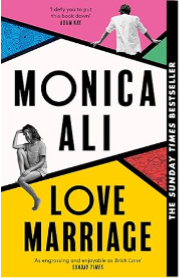 Love Marriage by Monica Ali
My third choice is Love Marriage, by Monica Ali. Where The Silent Treatment is a novel about the consequences of not talking, Love Marriage is a novel about the complexity of everything that lies beneath our conversations.
The book follows Yasmin Ghorami, a British-Bengali junior doctor engaged to Joe Sangster, a fellow doctor from a wealthy, liberal, upper-middle-class family. As their wedding approaches, long-buried secrets, cultural expectation, family loyalties and differing views of relationships begin to surface.
Why read it?
As family professionals, most of us already know that relationships rarely involve just two people. As a Resolution Mediation Foundation course trainer, we look in detail about all the people and voices who are NOT in the room – parents, siblings, in-laws, culture, religion, history, expectations and unspoken loyalties often have a huge impact on the decisions our couples and families make, whether they have been asked or not!
One of the most interesting element of this book is Yasmin’s belief in her parents’ “love marriage.” She has grown up viewing their relationship as a romantic success story and a model for her own future – much like some of our clients who battle against being a less than perfect couple or family (think Instagram or #ourperfectfamily). As the novel unfolds, she discovers that family stories are often incomplete, selective and heavily edited.
For me, this book reminded me that there are always multiple truths operating within family systems, depending on who is looking in.
Much of the conflict arises in this novel not because people disagree, but because they believe they already understand one another. There are so many conversation that should have happened, but never did. By the time people reach mediation or legal advice, there is often a history of things that felt too difficult, too embarrassing or too painful to discuss earlier.
It confirms what we know, that within families, conflict doesn’t often come from a bad place, but from loyalty, shame, secrecy, identity or the fear of disappointing others. Here the characters repeatedly make choices they believe are protective but which go on to create further misunderstanding.
Many separating couples are not necessarily trying to hurt one another. They are often attempting to manage competing obligations to children, parents, new partners, culture, religion or their own new or growing sense of self.
There is also an exploration of generational expectations, race and belonging as well as religion and secularism in the novel. This will be especially interesting and valuable to help us understand more about inclusivity and inclusive practice.
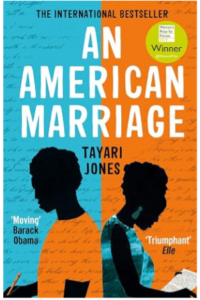 An American Marriage by Tayari Jones
Finally, I am recommending that you read An American Marriage by Tayari Jones. If I were creating a “novels every family mediator should read” list, this would be very close to the top, and I have saved the best until last.
Of all the novels I’ve read recently (and I read A LOT), An American Marriage may be the one that most directly explores what happens when a marriage is subjected to forces entirely outside the couple’s control. Another familiar issue for us – when allegations are made that cannot be ignored.
Why read it?
The novel follows Roy and Celestial, a young Black couple whose promising marriage is shattered when Roy is wrongfully convicted of rape and sentenced to prison. What follows is not only about the courtroom drama, but an exploration of love, loss, loyalty, identity and the question of whether a marriage can survive when life changes one spouse beyond recognition. For us, it speaks to whether co-parenting relationships could (or should) survive such trauma.
There is a difficult question asked by this novel that many separating couples eventually confront: if two people make a commitment to each other, what happens when circumstances transform them into different people?. What makes the novel particularly valuable to me is its refusal to create villains, because neither Roy nor Celestial is easily categorised as right or wrong.
Both make choices that are understandable, even when you disagree with them. It underlines for me that we deal with people who as individuals experience the same events in very different ways.
To underline that, the story is really cleverly told through multiple viewpoints and letters, allowing us to see how each character interprets the same events differently. When I read it, it struck me that this mirrors mediation practice beautifully.
We often sit with two people whose accounts are not necessarily factually incompatible but emotionally worlds apart. As I have learned to be a better mediator and lawyer, mainly through working with other amazing professionals and therapists, I now know that experience shapes perspective, perspective shapes meaning and meaning shapes behaviour.
The emotional impact of trauma is another theme that runs throughout the book. Each of Roy and Celestial experience loss, but not the same loss. It is so important that we all work in a trauma-informed way, and the novel is a reminder that people affected by the same event may emerge with very different needs and perspectives.
I hope you enjoy! Happy Summer!
Rebecca Hawkins, Family Solutions Now