
Invisible disabilities
A lived experience of inclusion and adjustments
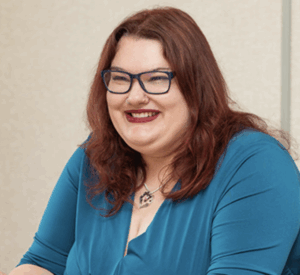 An invisible disability (or hidden disability) is one which cannot be seen from the outside, yet still affects the person who has the disability on a day-to-day basis. This article explores my own personal experience of growing up with one, and now working full time as a solicitor. Every single person who is disabled has their own unique experiences.
Inclusion and adjustments to allow for disabled people to work in the legal field should be discussed, and much more openly. A House of Commons Library report found that around 24% of people working generally are disabled. But according to SRA figures, only 9.3% of people working in the legal sector are disabled.
I always wanted to be a lawyer – it was a dream of mine for as long as I can remember. I went to a school where there were lots of children in poverty, had social services involved, and I knew from that point onwards I wanted to work in an area that would help this system be better and do better. It hasn’t been smooth sailing, and this is largely thanks to my chronic illnesses and disabilities.
When I was about 11 years old, I was in huge amounts of pain all the time. I started to dislocate my thumbs, then my shoulders, then any random joint that felt like it on the day. Eventually, I was diagnosed with the first of my “invisible” disabilities, Ehlers Danlos Syndrome, Hypermobile Type.
As a young teen, I suddenly faced a huge amount of judgement. I was provided with a blue badge by the local council, as I had days when I could barely get out of bed due to pain and fatigue, and when I could, I was in pain and I would fall over or dislocate something. I cannot count the amount of times I had stares, comments or whispering about me because I “looked normal” and was “young” taking up a disabled spot in the car park.
I grew up very lucky with supportive parents. They fought very hard for me, against a comprehensive school which did not really understand what I needed or what they should have been providing to me.
I missed lots of school due to illness. Any cold or virus would make me incredibly ill, and I could be bedbound for weeks at times.
I had to have special measures for my GCSEs and A Levels – additional time, a separate room, and more judgement from peers who didn’t understand. I lost friends, struggled to pick these friendships back up, found I struggled to fit in anywhere until year 11, and so began my social anxiety journey.
As I have got older, I have picked up more disabilities and illnesses. I “won” the genetic lottery, I like to joke. Some are linked to the EDS I was diagnosed with as a child – for example I now have arthritis in my back which is debilitating and is directly caused by the damage EDS has caused. You might see the impact of these disabilities on some days. I might use a walking stick, a mobility scooter, have splints on. Other days I look like any other “normal” person in her 30s. Every day, I am in pain and every day I am struggling with something.
Since working, there have been some good and some less good experiences I have had with inclusion and adjustments. I was once really ill with one of my conditions and was told by someone who was senior to me how things could be worse as there are “people dying on the street in India”. Whilst true, this was not empathetic as I needed to get to hospital at the time! Disability, illness and the impact does not need to be a competition.
I have worked incredibly hard to get to where I am now. I am a senior associate and head of a Legal Aid department, and I love the firm I work for.
I absolutely do feel, at times, I have had to work harder than people who do not have disabilities for the same, or even fewer, opportunities. I think it is probably a lack of understanding rather than a deliberate choice, but the impact is the same.
According to the Resolution Foundation, disposable income for disabled people is 44% less than non-disabled people. Two fifths of disabled people struggle to afford to heat their homes. I know it costs me more than my friends to heat my home: I have to keep my heating on higher and for longer because if I am cold I am so much more unwell. Hybrid working, whilst amazing in some respects (see below), has caused my bills to soar!
Presenteeism is something which I personally experience a lot. This is where I continue to work despite being unwell, which actually means I am at a reduced level of functioning. I have an absolute fear of letting my firm and my team and my clients down. Presenteeism is now a phenomenon recognised by the UK government. (See also and “Whenever I can I push myself to go to work”: a qualitative study of experiences of sickness presenteeism among workers with rheumatoid arthritis: Disability and Rehabilitation: Vol 40 , No 4 – Get Access)
In terms of practical adjustments, I have several in place with my employer.
Until the Covid Pandemic I worked full time in the office. This was at times very difficult due to health needs. Fortunately, one positive of the pandemic was the more flexible working outcomes I know a lot of firms are now offering. Hybrid working is fantastic for me. I aim to go into the office three times a week. If I am struggling, I will go in less, but I am still able to see my team and my seniors, and hold meetings.
This is something I hope will only progress with time and not go backwards. I also hope very much that flexible and hybrid working due to disabilities will never impact on someone’s promotion opportunities.
This incredibly helpful adjustment allows me to attend my many medical appointments, and I can work around these flexibly. Luckily, working in the area of child protection means my role is never 9-5 anyway!
I also work flexibly when I am in the office. I come in a little later so that I can avoid sitting in rush hour traffic, as long journeys affects my back and hips.
I have made an application to the government under the Access to Work Scheme. This is a little-known Scheme which aims to help get a disabled person back into work, or keep a person in work.
Dictation is a brilliant resource, as it means less typing.
My biggest piece of advice is to ask for help. Be open. Have discussions. I was personally surprised to read on the Law Society website recently that only 66% of line managers are aware cancer is classed as a disability.
I spent many years in the early stages of my career struggling a lot more than I needed to. It is scary and it can feel embarrassing to ask for help from your employer. However, they cannot put the right support in place for you if they do not know what you need.
My inbox is also open if anyone has any questions or concerns. I am happy to try to offer some advice or assurance.