
In this personal reflection, Sadie Glover explores the friendships, kindness and collaboration that make family law a community. Drawing on her experiences of launching the Family Law Friends podcast, she shares how honest conversations about careers, wellbeing and life’s challenges reveal the people behind the profession, and why supporting one another matters as much as professional success.
 Back in the summer, Estella Newbold-Brown and I had the enormous pleasure of celebrating the launch of our book, A Practical Guide to Pets on Divorce for Family Lawyers. Surrounded by friends, colleagues and familiar faces from the family law community, it was a truly wonderful evening. What made it so special was not simply the publication of a book, but the warmth, encouragement and shared purpose in the room.
It reminded me of something I have come to value more and more over the years: that our profession is built not only on legal knowledge and technical expertise, but on collaboration, generosity and the relationships that sustain us. It was a celebration of the book, but also of the people who make family law feel like a community.
When I qualified as a family lawyer more than twenty years ago, I believed being a good lawyer was largely about mastering the law. Knowing your way around the law is, of course, the foundation of everything we do. But if you asked me today what has most shaped my career, my answer would be very different. I would not talk about case law or statutes. I would talk about people.
I would talk about the colleagues who encouraged me when I lacked confidence. The friendships that became collaborations. The conversations that sparked new ideas. The people who quietly opened doors, offered opportunities, or simply asked, “How are you?” The longer I have spent in family law, the more convinced I have become that careers are rarely built alone. That belief was the starting point for Family Law Friends.
The people behind the profession
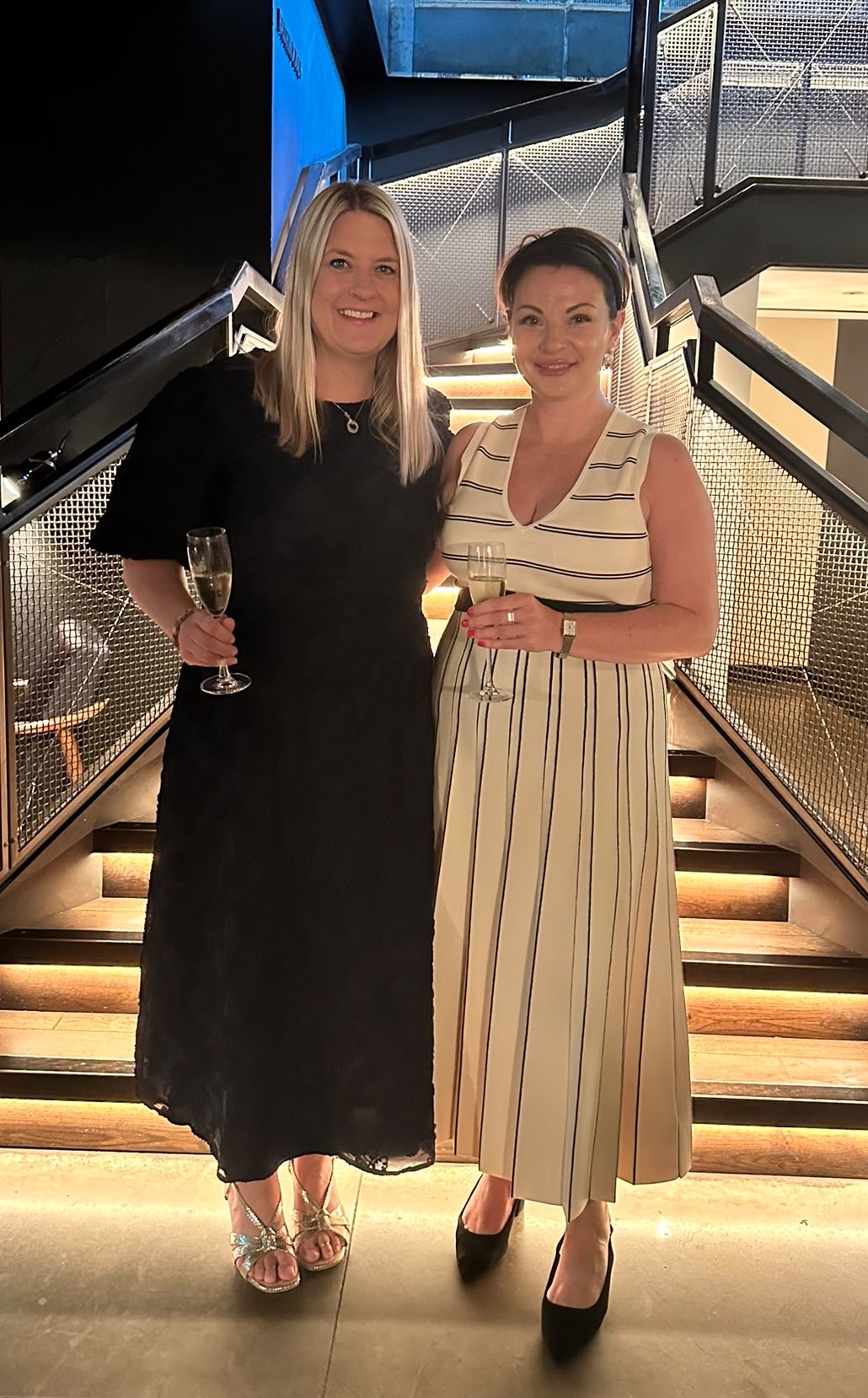
Estella Newbold-Brown and Sadie Glover at the launch of A Practical Guide to Pets on Divorce for Family Lawyers
When I created Family Law Friends, I was not trying to produce another legal podcast. There are already excellent podcasts analysing judgments and discussing developments in family law. What I felt was missing was a space for the conversations that sit behind the cases and the careers: the friendships, doubts, turning points, setbacks, and moments of kindness that shape who we become as practitioners.
I wanted to create a space where family justice professionals could have honest conversations about their careers, friendships, wellbeing, and the realities of working in one of the most emotionally demanding areas of practice. The idea had been with me for a while but rolling it out on my own felt at odds with what the podcast was intended to be about. So, I reached out to Estella and invited her to co-host. She brings warmth, humour, and insight to every discussion.
My hope was never simply to interview successful lawyers. It was to understand the people behind the job.
The human side of family law
Like many Resolution members, I have the privilege of helping clients through some of the most difficult periods of their lives. We guide people through separation, financial uncertainty and disputes involving children. It is deeply rewarding work, but also incredibly demanding.
One of the greatest surprises since launching Family Law Friends has been what guests choose to talk about. Many have exceptional careers, yet rather than focusing on their achievements, they speak about imposter syndrome, self-doubt, balancing work and family life, grief, burnout and the pressure of feeling that everyone else has everything under control. These are the conversations that resonate most with listeners, reflecting something our profession has needed for a long time: permission to acknowledge that we are human too.
A conversation that stayed with me
When Keeley Lengthorn joined us on the podcast, she spoke with extraordinary honesty about the death of her baby son, George, and the campaign that followed to bring about George’s Law. It was an intensely moving conversation, not because it was sensational or dramatic, but because it was so open, so honest, and so deeply human.
Keeley spoke about unimaginable loss with remarkable courage and generosity. She also spoke about continuing to practise family law whilst carrying that experience with her every day.
It made me reflect on something we perhaps do not acknowledge often enough. We spend our careers supporting people through grief, trauma, separation, and profound change. We become skilled at helping others navigate life’s most difficult moments, but we sometimes forget that we face life’s challenges ourselves. None of us practises in a vacuum. Our own experiences shape us. They deepen our empathy, influence how we communicate, and remind us why kindness matters so much.
That conversation encapsulated everything I had hoped Family Law Friends would become. Not simply a podcast about family law, but a place where people feel able to share the experiences that have shaped them, and where listeners can recognise that behind every accomplished practitioner is a human being with a story of their own.
Collaboration over competition
I chose the title Family Law Friends because friendship has shaped almost every opportunity in my own career.
When I look back over the past few years, I can trace most opportunities to a relationship. Not networking. Not self‑promotion. Relationships. People who believed in me. People who encouraged me to say yes when I doubted myself. People who celebrated my successes as enthusiastically as their own. We sometimes give the impression that successful careers are built through individual determination alone. I do not believe they are.
Behind almost every successful family lawyer is someone who offered encouragement, shared knowledge, made an introduction, or simply reminded them that they were capable of more than they realised.
The generosity at the heart of family law
Family lawyers often say that our profession is different to most others. I think they are right.
Resolution has long championed an approach built on reducing conflict, acting with integrity, and putting families first. Those principles undoubtedly benefit our clients. But I have come to realise they also shape how we treat one another.
That generosity of spirit is one of the reasons I have remained so passionate about family law throughout my career. It is reflected not only in the work Resolution does nationally, but in local committees, regional events, and the countless conversations that happen behind the scenes. Experienced practitioners freely share knowledge. People give up evenings to mentor junior colleagues, deliver training, or support Resolution. Competitors recommend one another for speaking engagements, committee roles, and writing opportunities. Some of the best ideas I have had, the opportunities I have been given, and the friendships I have formed have all started with a simple conversation. That generosity is one of family law’s greatest strengths.
It reminds me that our profession is at its best when we recognise that another lawyer’s success is not a threat to our own. There is room for all of us.
I am also struck by the kindness within our family law community. Kindness is sometimes dismissed as something soft. In my experience, it requires confidence. The strongest leaders I have worked with have led with kindness and respect. They challenge where necessary and maintain high standards. But they never forget that the person sitting opposite them is another human being.
A community that looks after its own
When I created Family Law Friends, I thought I was producing a podcast. In reality, I was creating an opportunity for conversations that perhaps should have been happening all along. The greatest compliment I receive is not that someone enjoyed an episode. It is when someone tells me, “That made me feel less alone.”
If one conversation about friendship, wellbeing, or self-doubt encourages someone to stay in a profession they love, then every hour spent writing, recording, and producing the podcast has been worthwhile. Family law will continue to evolve. Fresh authorities will reshape the advice we give. We will continue to learn, to teach, and to develop as practitioners. But I hope we never lose sight of something equally important. Behind every family lawyer is a person. And behind every successful profession is a community that looks after its own.
Perhaps that, more than anything else, is what Family Law Friends has taught me.
Sadie Glover, Blaser Mills Law