
Talking Family Law – LIVE Podcast recording: economic abuse
The subtle patterns that may signal economic abuse, and being confident in identifying them early.
 Family law professionals are often instructed at the point where a relationship has already fractured. Financial advisers, however, are often in the room much earlier.
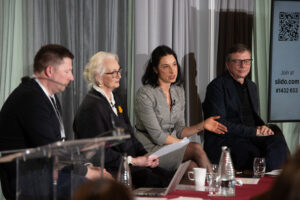
That was one of the themes to emerge from the live recording of Talking Family Law at the Resolution Financial Advisers conference in March 2026 where Angela Lake-Carroll, Anita Mehta and Simon Blain were joined by fellow financial adviser Steve Hennessy to explore economic abuse, family law reform and the role advisers play within this landscape.
Angela opened the session by zooming out. She said domestic abuse is always about an individual seeking power and control. It can start with finances, but can intensify into violence and, in the most extreme cases, homicide.
She went on to recall harrowing statistics on economic abuse, domestic homicide and suspected suicides across different demographics. She also noted that these were reported figures. It is thought that the numbers are underreported, particularly in men.
For me, the takeaway was clear: financial advisers can be on the frontline of early identification. We should seek to differentiate economic abuse from poor financial behaviour or communication issues, as this is a safeguarding concern.
 Steve recalled his own experience of a high-earning client who paid her income into a joint account and then received only a fraction back for herself. They had been high school sweethearts, and she had fallen into this routine until she realised she could not even afford to buy basic personal items independently.
A joint account in name, but not in practice.
In my own practice, focused largely on supporting women to build financial clarity and independence, I too have seen indications of economic abuse long before separation is contemplated. Others in the room recalled more common instances where there are pensions and investments a client has never seen documentation for, and debts quietly built up in the victim’s name.
In isolation, these details can appear administrative. In pattern, they may indicate coercive control.
Steve spoke about how easily red flags can be dismissed as traditional role division. It is very common for one of the couple to take the lead on finances. But the session encouraged us to look more carefully: signs of withholding financial information, delaying disclosure, using debt as leverage, insisting on sole control of digital access. These behaviours can form part of a wider pattern.
An audience poll asked how often we are concerned with financial information being restricted during separation. The three options to choose from were frequently, sometimes and never. 50% of the room reported that this happens frequently, with the other 50% selecting sometimes. No one in the room opted for never. Those numbers are telling but sadly unsurprising.
The Resolution Good Practice Guide on Domestic Abuse which Angela co-authored to was referenced, as it reminds practitioners to remain alert to abuse throughout a case and to consider safeguarding at every stage. That principle applies equally within financial advice. Screening should not be a one-off question. Dynamics evolve, and risk can escalate.
The session also touched on the financial barriers to access legal support as well as challenges with getting legal aid. Victims may be faced with taking on high-interest loans or drawing on family resources to pay for legal fees, which may not be an option. Decisions are being made under pressure, when tired, overwhelmed and facing trauma. This linked to the insightful session earlier in the day on trauma informed practice. When a client is operating from trauma, their ability to process information is impaired.
As advisers, this demands a shift from a role that has traditionally focused on investable assets to one that centres on the client. Technical expertise remains essential. But a cashflow model is not empowering if the client lacks agency. Particularly where one of the couple has spent years deferring financial decisions, empowerment begins with understanding and access.
Clarity and safety must sit alongside technical advice. Gentle, open questions can surface vital context: Who has access to the online banking? Are financial decisions shared? Has anything changed recently in how money is managed?
Steve highlighted another important point later in the session. Hardship caused by abuse does not necessarily end with separation. The impact can last years. Individuals may withdraw socially, lose confidence in their professional capabilities, or struggle to re-engage fully in their careers.
The session closed on an important note: be confident. We do not need to be the expert in domestic abuse. But we do need to know who the experts are and be able to signpost clients appropriately, collaborating with specialists to ensure clients access the right support at the right time.
If financial advisers are often present years before proceedings begin, then early awareness matters. We can contribute meaningfully to safer outcomes. We could even save someone’s life.