
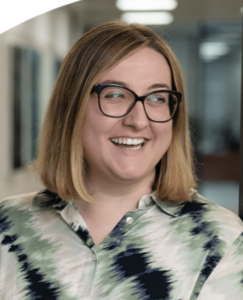
 For PMOS Awareness Month, I wanted to share something of what it is like to live with PMOS while working in family law – particularly the parts that colleagues and employers may never see.
What is PCOS/PMOS?
PMOS stands for Polyendocrine Metabolic Ovarian Syndrome but you may know it, at least until fairly recently, as PCOS. The recent name change reflects that PMOS is not just about having abnormal cysts on your ovaries; it is a whole body, sometimes chronic, condition that affects weight, metabolic and reproductive systems as well as fluctuations in hormones.
It is understood that 1 in 8 women are impacted by PMOS.
The NHS website summarises it as a “hormone condition that can affect hair growth, periods, fertility and mood. There is no cure, but treatments and lifestyle changes can help.”
What those words simply can’t capture is the lived experience of PMOS; the mood swings, the brain fog, the physical and mental fatigue, the exhaustion of being told to improve your symptoms by losing weight but the stress and anxiety of that proving so difficult because PMOS can itself make weight management more complicated.
The key point is that PMOS can take many shapes and forms – you could have three women all diagnosed with PMOS and it will present itself differently in each of them.
My diagnosis journey
I was diagnosed with PMOS (then PCOS) in 2023, but I was presenting with the symptoms for a long time before that. My periods were so irregular, I never knew when they would arrive and, when they did, they could last anywhere between 2 to 10 days with varying degrees of bleeding. I eat healthily and in moderation but never could seem to shift significant amounts of weight, no matter how hard I tried. I had excess hair on different parts of my body, mainly my chin.
I never really connected the dots around all of these symptoms until one day when I was having said chin hair threaded and my beautician said she had seen this before in other clients who had PMOS. I had never heard of it before, but it was from that conversation that I then spoke to my GP.
I would love to tell you that I felt seen and heard once I started to investigate this medically but sadly (and I’m sure somewhat unsurprisingly) I had to advocate for myself. The discussions around diagnosis focused solely on whether I put the “PC” into PCOS – i.e., whether I had any abnormal cysts on my ovaries despite presenting with most of the other symptoms.
Following an ultrasound, in which my ovaries lit up like a Christmas tree with the number of cysts, my condition was still downplayed. Despite receiving an official diagnosis, the conversations about managing PMOS centred on my fertility; if I wasn’t actively trying for a baby, was this not something I could just live with? Well, yes because I had been living with it so far without much help but wasn’t that the point of receiving a diagnosis, so I could be guided on how to live with and manage this lifelong condition?
I felt disappointed and let down that it essentially felt like a shrug of the shoulders and a “do your best, kid” approach. I realise now, with hindsight, that this was in reality symptomatic of a much wider problem; there is a knowledge gap in terms of PMOS awareness, meaning GPs simply aren’t equipped with the specialist knowledge or resources needed to provide comprehensive support.
The invisible reality of PMOS
Here is what you might see:
a woman struggling with her weight, with getting pregnant, with excess hair over her body.
Here is what you definitely don’t see:
brain fog, hormonal symptoms that can be difficult to predict, sleep disturbances, and a sheer unpredictability in how you are feeling. I have gone into work some days and had to leave again because I am overcome by horrific nausea, or because my brain can’t write the simplest of emails – I’m talking those one- to two-liners that are inconsequential but to me, felt insurmountable.
And what makes it harder is that I don’t feel like I should be going home because of these. Every woman has to ride the wave of fluctuating hormones, so what makes me so different? For me, the difference is that my body has to work doubly hard to manage these symptoms and the impact it can have on my ability to function.
The best way I can describe it is that, when I am in throes of a PMOS “flare up” (for lack of a better phrase), I feel completely out of control of my own body. No matter what I do – the meal prep, the exercise, the supplements – it feels like it doesn’t make a difference. And that is a really difficult headspace to be in when you also feel like you shouldn’t be making a fuss.
PMOS and working in family law
Working in family law can be demanding at the best of times. There are court deadlines to be met, hearings to prepare for, urgent emails that come in throughout the day, clients who need not only advice but also reassurance and emotional support. Needless to say, our jobs can be emotionally draining no matter what structures you put into place.
When you add PMOS into the mix, there are times when simply getting through the working day can require considerably more energy than anyone realises. There have been days when I have felt mentally exhausted or struggled with brain fog but still had to prep for a hearing or attend a client meeting.
I probably look and perform exactly the same as I always do; I can still do my job, meet my deadlines and appear perfectly capable but internally I am in turmoil. That can make it very easy to fall into the trap (which I have done many times) of pushing through and telling myself that I am fine because I am still functioning. But there’s a difference between being capable, and it being sustainable to keep powering through. “Everyone is struggling with demanding caseloads” is an easy conclusion to reach, and an easy excuse not to rest. But for someone managing a chronic condition, there can be a point where “demanding” is something more than simply having a busy week or a tricky client.
What I want you to know
I am fortunate enough to work in an incredibly caring and supportive team and often my problem is that I simply don’t advocate for myself enough. I grew up with the mentality of “take two paracetamol and get on with it” which works 90% of the time but when living with a condition like PMOS, I sometimes have to quiet that voice and cut myself some slack.
If you know someone who has PMOS, whether in or outside the office, the key takeaway is that you don’t need to understand every aspect of PMOS to be supportive – you just need to recognise the genuine impact it can have on someone’s physical and mental wellbeing, and that how someone is presenting on the outside does not necessarily reflect what is happening inside.
I am a big Ted Lasso fan and one of my favourite quotes from the show is “be curious, not judgmental” and I would encourage anyone supporting someone with PMOS to adopt this mentality. I personally don’t ever want to feel like a burden at work but a colleague taking the time to understand how PMOS affects me can be the greatest show of support because it emboldens me to take my condition more seriously; if I need to ask for an adjustment in workload or if I’m having a difficult day, knowing that my team don’t read into this as a sign of my commitment or capability will help me continue to seek the support and adjustments I need to make my condition more manageable.
This is especially important when working in family law – we spend our working hours supporting people going through the most emotional and difficult periods in their lives and sometimes, that follows us home. While family lawyers can desensitise to a degree and leave their work at the office, when you have PMOS and are some days battling with your own body, it can push your resilience down a notch or two. Sometimes striking the balance of being able to do the job without sacrificing your own wellbeing is difficult, so having supportive colleagues around you to help shoulder that is incredibly important.
What can employers do?
For conditions like PMOS, where symptoms can fluctuate and are not always visible, flexibility can be the greatest tool. This might mean being open to adjustments to working patterns, workload or deadlines when someone is experiencing particularly difficult symptoms or simply allowing someone to work from home on a day when they are struggling.
Managers and colleagues do not need to become experts in PMOS; even people who have the condition are not well versed in how it impacts them! Instead, be willing to listen and ask what would help. A person with PMOS may still be working out what is actually useful in terms of managing their condition, which may in turn change over time, so being open and considerate to shifting needs is key.
Most importantly, employers should recognise that supporting someone with PMOS is not about lowering expectations; it is about creating an environment in which people can continue to meet those expectations without having to choose between doing their job well and looking after their health.
Learning to work with my body, not against it
I’m three years on from when I was first diagnosed, and some days it feels like I am no further forward. But I am slowly learning to recognise when I am going into, or am in the midst of, a PMOS flare up rather than retrospectively once I’m out the other side.
I am also getting better at moving away from seeing PMOS as something I need to constantly fight or overcome; it is, after all, a lifelong condition currently with no cure so I have to start seeing it as a houseguest with no intention of moving out – we’re going to have to learn to coexist peacefully and that means understanding my body better and accepting when it needs rest.
Much like the rest of women’s health, progress is slowly but surely being made to understand more about PMOS and what guidance should be given in terms of managing it. But to all my fellow “cysters” out there, PMOS is not a reflection of our capabilities as lawyers. If anything, we know better than anyone how resilient we are – we just need to teach our brains that PMOS is not a chink in our armour but just another part of ourselves that we can learn to understand and work with.
Having PMOS does not make us less ambitious or incapable of having a successful career; it simply means that sometimes, we need to give ourselves the same empathy and compassion that we so readily give to our clients.
Lucy Gillman, Associate, Cripps