
Full Steam Ahead: Resolution interviews the new chair and vice chair
Cohabitation reform, NCDR, developing the regions and YRes, expanding our membership to other professionals … Our new chair and vice chair do not intend to drop the ball or let the wheel stand still
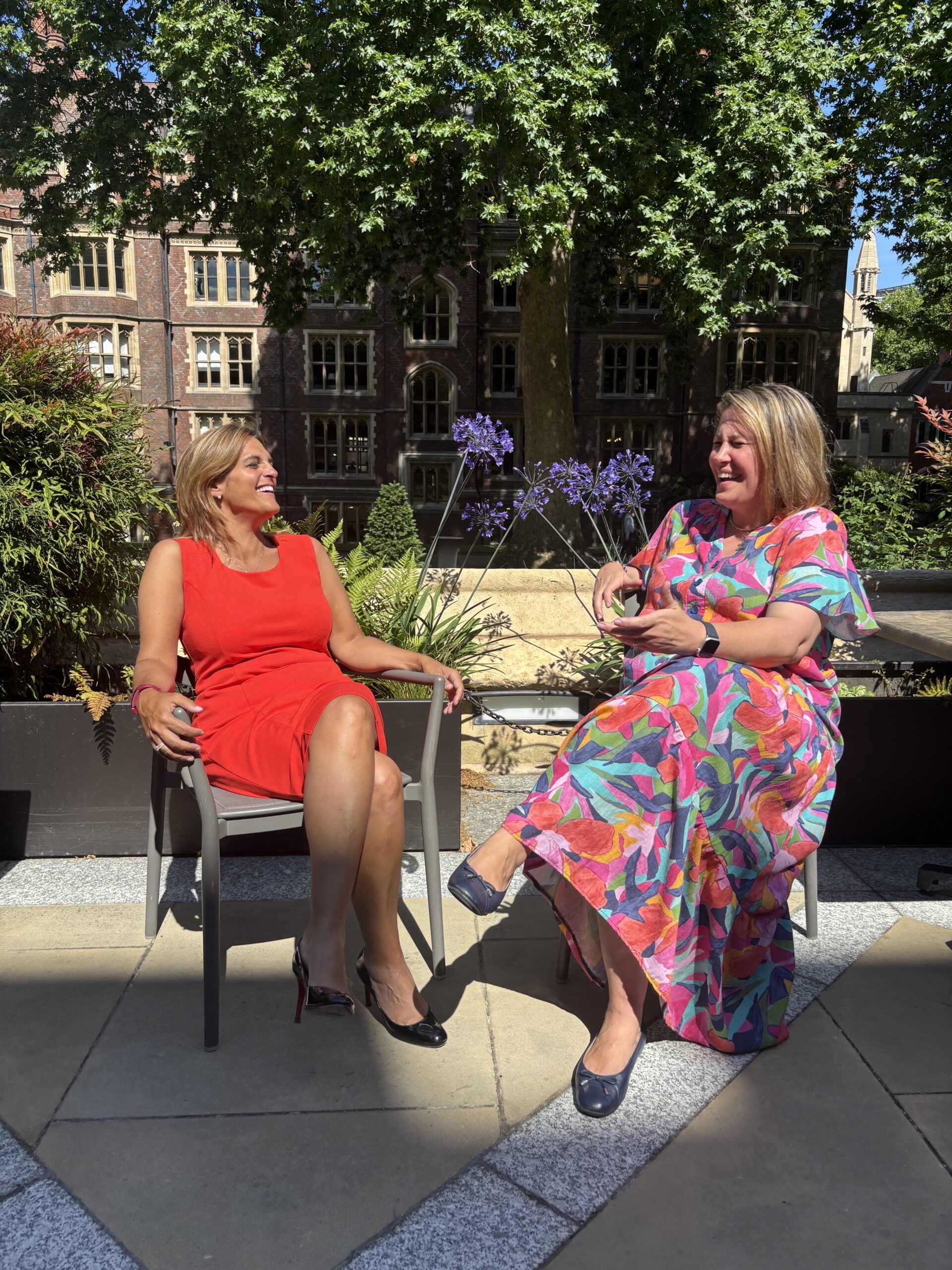 As our new National Committee Chair Melanie Bataillard-Samuel (MBS) and Vice Chair Lucy Loizou (LL) step up to the plate, director of communications Matt Bryant finds out what Resolution means to them
Melanie, congratulations on becoming Chair of Resolution. Let’s go right back to the beginning. Why did you originally choose to go into family law. Was it something that you studied? Or did you have other jobs that led you down this path?
MBS: I kind of fell into it. I initially wanted to be an employment lawyer, but I was asked to sit in family law, and I did it as an extended seat as part of my training. When I qualified, the firm asked if I wanted to stay in family and it was a no-brainer, I was enjoying family law, I found it really good fun and I’ve never looked back.
What is it you most enjoy about working in family justice?
MBS: It’s all about relationships and helping people deal with the fallout from a difficult relationship breakdown. Of course, it can be incredibly challenging to have to deal with this day in, day out. You have to learn to look after yourself as well looking after your clients, but however difficult it can be, it’s really fulfilling. I love knowing that I am a big part of helping families through a very difficult time.
Well, Lucy, over to you. How did you end up in in family law?
LL: When I was at college I knew that I was either going to be a sports teacher or go into law. I ended up going into law, and the rest is history. I joined a firm in Surrey to start with and ended up qualifying into private client work. After a year of doing that, I couldn’t see myself doing that area of work for the next 45 years. At that time there was a vacancy in the family department, and, like Melanie, I never really looked back. I’m a people person, and that’s what I love about family law – the human interaction.
Lucy, you’ve been involved with Resolution for a long time. Why did you originally get involved with the organisation?
LL: Membership of Resolution was very central to my practice early in my career. I was fortunate enough to go to my first National Conference soon after I was qualified. I quickly came to realise that Resolution is all about changing the way that family law is developed. I’ve been a Resolution member for almost 20 years now. When I started out in Surrey, someone I was working with told me to get involved with Resolution, they highlighted that it was a good way to meet people and to create a network as a young practitioner starting out, and that continues to be the case today.
And Melanie, for you, how did you start getting involved in Resolution?
MBS: I didn’t have a choice really. If you were a trainee in the family seat, you were automatically enrolled in Resolution. From the moment I did my seat I was a member. I remember, when I first became a Resolution member, our usual regional get-together was in Henley at one of the rowing clubs. To begin with, I felt that having to go there was such a chore, but I quickly realised that there were lots of lawyers who were practising differently to how my firm was practising. We all made sure to discuss our experiences and to help one another, and I started to look forward to these meetings. It was just great experience to learn how to interact with your peers, and to establish that network of lawyers that you could fall back on.
At the time Resolution was the only dedicated family law membership organisation that I could be a part of, and being forced to join was possibly one of the best decisions that my training firm made for me. It was compulsory, and it opened doors to courses and made me participate in networking events.
Presumably you’d both encourage more firms to take that approach, and to encourage their staff to join Resolution from the outset?
MBS: Definitely. Every time I visit a region or speak to other lawyers, I ask if they have any YRes members and explain the benefits for their firm of having their staff be a part of Resolution.
The biggest challenge I’ve found, is that when I speak to junior members I am having to try to encourage them to be more actively involved in their region. That’s the best way of making sure you’re getting the most from your membership!
What do you think the biggest changes have been in both the profession and within Resolution since you joined the organisation?
 LL: Well for me, I think it’s the digitisation of how we work. Our court systems have changed so much and so quickly – certainly since the Covid-19 pandemic. We now have an online portal for divorce cases, we have remote bundles, and my firm works completely paperless, which was rare in many firms 10 years ago.
In terms of Resolution, the opening of membership to different categories of people has been the biggest change. When I initially joined the National Committee, we were just starting to think about opening membership up to barristers and other family law professionals. There was a big debate in various National Committee meetings as to whether the organisation should allow non-solicitors to be members. I’m pleased to say that we made the right decision, and I think the organisation has changed for the better as a result of opening it up to the entire family justice community, rather than just to solicitors.
And Melanie, from your point of view, what do you think the biggest changes have been?
MBS: One of the big changes is the fact that that we as family justice practitioners are far less siloed in how we work than we were before. It’s no longer about being a mediator or a collaborative lawyer, or about working solely in a DR way, it’s much broader than that. I think we are all starting to take the skills from everything and trying to apply them to what’s best for our clients. This seems to have happened without anybody really noticing it’s happening, and Resolution has had a big part to play by widening the scope of what it is to be a family justice professional. We’re now much more open about working in these different ways.
Another big change for the profession is the lack of legal aid. The fact that there is no longer that support for those who cannot afford legal advice. I think that has led to people not having legal advice, people not doing the best thing for them and their children and flooding the courts.
What impact has Resolution had on your career progression and how do you use what it offers in your day-to-day work?
MBS: I think the obvious thing is the Code of Practice. The Code has shaped how I work. Having the code on hand to refer to makes you realise that there’s a different way of working.
Resolution has given me an amazing network. Wherever I’ve worked in the country, Resolution has always been there for me, it has helped me to create links to other lawyers, share stories and support each other.
LL: Being a Resolution member makes you feel like you’re not just making a difference to your day-to-day work, but actually, the way that family law and practice is run generally.
Resolution really shaped the kind of lawyer I am today. I feel like I’ve grown up with Resolution. It has made a difference to my day-to-day work, it makes a difference in the way I write, in the way I speak to clients and colleagues, and in the way I handle my cases.
Resolution promotes a non-adversarial approach to resolving cases, and by being a member, you always keep that in mind whenever you deal with families who are going through a difficult breakup. It has taught me a different way of working and has developed my practice and has given me the ability to meet people I wouldn’t otherwise meet. Whether it’s personal profiling opportunities or firm profiling, I have been able to create a network that has allowed me to grow.
Melanie, in your speech at National Conference, you talked about it being a crucial time for family justice. What do you think are the biggest challenges facing our members?
 MBS: The absence of funding is massive, but there are many more challenges, too. The adoption of artificial intelligence (AI) technology is certainly changing the way we work. I’ve talked to many members who are genuniely worried about where their job is going if everybody’s going to be using AI.
The state of our courts is also another challenge. HMCTS is doing great work, but they’re hugely underfunded and overworked, and to be honest, we’ve all been in court buildings that are simply falling apart.
For me though, the biggest challenge is attracting and retaining young talent. I remember two years ago asking: “are young lawyers who train into family law, staying in family law, or are they leaving because the work-life balance is difficult to support their wellbeing?” Family law is such an emotionally charged area of law it can be very difficult to look after yourself too.
Lucy, one of the real benefits of being vice chair is that you get to chair the Regional Liaison Committee. Based on your experience, what do you think is the key to having a successful and thriving Resolution region?
LL: There are four key things. Firstly, you need to have a connection with members. Two, I think you have to establish a connection with YRes in each region. YRes is pivotal to the progression of our organisation, and in most regions YRes is the most buzzing part of Resolution. We need to harness that enthusiasm and make sure that people maintain it throughout their time as part of Resolution.
Thirdly, I think the National Committee representative for each region has to be fully engaged and connected with the region, and fourth, it’s important that Melanie and I are really visible. We both understand that we have a duty to have connections with all regions at national level, and we’ve already travelling around the country to see as many members as we can.
Melanie, in your couple of years as chair of RLC, you’ve seen some regions have a resurgence and set themselves up again. What would your message be to members looking to set up a region?
MBS: If you want to get involved and you don’t know how to do it, speak to the Resolution staff. Reach out to some of those regions who are seeing great success, listen to your peers and see what they are doing. Regions are generally very happy to support each other, so reach out to nearby regions and host joint events – they can be really beneficial for start-up regions. And remember, when you start your region, it’s always going to be small to begin with, but don’t give up, keep persevering.
You have both been involved in various Resolution committees over the years, and we are always looking for more members to be part of our specialist committees. What would you say to encourage members to apply to join one?
LL: You have nothing to lose. If you don’t try, you won’t succeed and you’re not going to get the full benefit from your membership. Being part of a committee opens doors for you, both professionally in your day-to-day case work, but also boosts the relationships with your colleagues that you’re going to work with through your career. If you’re keen and you’re enthusiastic, just do it.
MBS: If you want to give back to Resolution, volunteering with one of the specialist committees is a brilliant way of doing it. You are going to be leading the charge on law reform. You’ll be an essential part of developing good practice guides and will play a key role in informing future training. Our committees shape the future of Resolution.
It’s also important that you don’t get too hung up about the amount of time it takes. Some people are incredibly active, and we are so grateful to them for that, but you don’t have to go above and beyond if your personal and working lives get in the way. The mere fact you are involved and are providing your expertise is a huge bonus to Resolution.
Lucy, you were instrumental in leading the charge for the setup of YRes. You’re clearly very passionate about it, so what message would you give to those reading this who are at the start of their careers?
LL: I can’t endorse YRes enough. Being involved with Resolution at the start of my career was such an important thing, because I didn’t know anyone, and I didn’t really know very much. YRes allowed us to build a community and bring people together who were experiencing the same thing.
I would say to people who are thinking about their professional development to engage with their YRes network and attend as many events as possible. It’s an amazing chance to meet the peers that you’re going to be working with for the next 40 years of your career. All the people I now know, and that I am working with today, are those same people who got involved with YRes at the beginning.
Let’s look at law reform now. We’ve been campaigning for a number of years for legislation to protect cohabitees, and after many, many years it looks like we’ve got a commitment from government now to do it. What difference do you think cohabitation reform will make for our members and their clients?
MBS: If there is a clear law which family lawyers can grapple with, it will enable cohabiting cases to move within the family law sphere. It will mean cohabiting couples are effectively being dealt with by the same people who are used to dealing with relationship breakdown, who are used to dealing with children and who are used to dealing with families and know how to address that.
I think it will help us as lawyers to know what we can do and the advice we can offer. Even if the law doesn’t go the whole way to providing us with a set of laws like we need for divorce or financial remedies, it will provide us with more guidance, more support and more protection to help a growing pool of clients who need the same advice as married couples.
LL: The one word that I think reform would give to our members is “clarity”. Reform will bring clarity to what we can advise. It will provide a clear understanding of what the law is and a framework that we can advise properly on.
Let’s fast forward a couple of years and we’ve achieved cohabitation reform. What would be the next area of reform that you would both like to see?
LL: I deal with a lot of money work, so I think I have to highlight financial remedies reform needs.
MBS: I completely agree with Lucy. I have a few French clients, and I cringe when I have to explain to them that our financial remedy situation is all over the place; it’s a little bit of this and a little bit that. I’m not sure what the answer is and how we can fix this, but it does need to be looked at and reviewed.
Over the next two years, as chair and vice chair, what are your priorities for Resolution and our members?
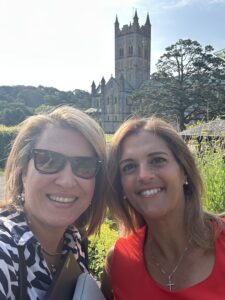 LL: We should definitely be prioritising YRes and engaging with regions. Our junior professionals are the future of the organisation, and I think it’s important that we get them involved in everything Resolution does from the off. Without our regions we don’t have a functioning organisation, so I want to build on the work of Juliet, Grant and Melanie and continue to engage the regions with our central activity.
I would also like to broaden the international scope of Resolution. That’s the bread and butter of my work and that which my firm undertakes, and I would like to continue to help to train and educate our members on international issues that arise in cases, especially as we now live and work in a country that boasts a lot of different cultures and backgrounds. So many cases now have some form of international element, and I still get nervous when I speak to people and they don’t have any idea as to what an international case is or what international issues they have to bear in mind.
MBS: Absolutely, it’s the regions. We realise that most of our membership engage with Resolution through our regions. Lucy and I are both in the mindset that we will be engaging with the regions as much as possible by being present, by being seen and by being accessible.
Second thing for me is broadening the membership. We’ve already started widening the pool of family justice professionals by bringing in members from other parts of the profession, such as financial advisors, divorce coaches and consultants, and international lawyers. We need to carry on building on that because in our day-to-day profession we work with these people, and we need to have them involved. I’d like to see an array of professionals feeling confident in being more involved with the organisation – whether it’s on committees or National Committee – because I think that will help to shape and grow the organisation further still.
LL: The other fundamentally important area continues to be NCDR. We have to work hard to develop this over the next two to four years and support the movement away from court, making sure that our members have the relevant training that they need.
You’re going to be spending quite a bit of time together as chair and vice chair. So, what would you say are the qualities you both admire in each other?
LL: This is so easy to answer! For me, what I like about Melanie is that she’s so hard working, ambitious, driven, kind, and is fundamentally a good person. She has a great energy about her and cares deeply for Resolution and everything that it stands for. I know that over the next two years we’re going to be working extremely hard, but we’re also going to have a load of fun whilst we’re doing it.
MBS: Lucy is always smiling, always happy, always enthusiastic. You could put her in any kind of setting, and she will get someone to talk to her, she’ll reassure someone, and she’ll make everybody feel comfortable.
What make’s Lucy such a perfect fit for the role is just how much she knows about Resolution. She’s been actively involved for such a long time, and she’s so passionate about wanting to give back to Resolution.
But, most importantly – I discovered during our first regional event together, that Lucy will always bring the snacks when we travel, so what more could I ask for?
And finally, I wonder if you can share with each other, and our membership, one interesting thing that you don’t know about each other?
 LL: Well, in 1995 I was a Wimbledon ball girl. I basically lived on Centre Court and Court 1 for two weeks and was lucky enough to be part of the men’s final seeing Pete Sampras lift the coveted trophy. It was just the most magical two weeks. I’ll never forget it.
My claim to fame is that I was on the back page of the Daily Mirror, running past Pete Sampras who was laying on the floor as I was picking up the ball. My parents still have this photograph on their wall at home!
MBS: For many years as a teenager, I used to travel around Europe working on fairgrounds. One of my friends owned a Ferris Wheel, and it was quite normal amongst that community to have friends and family manning the tills and collecting tickets. So, I would frequently find myself at the Ferris Wheel, handing out the tickets, which was quite an experience. I did that for about 10 years, and we’d go off to Lille, Liège, Charleroi and Rotterdam on a couple of occasions.