
Remembering Henry Brown: a (gentle) giant of mediation
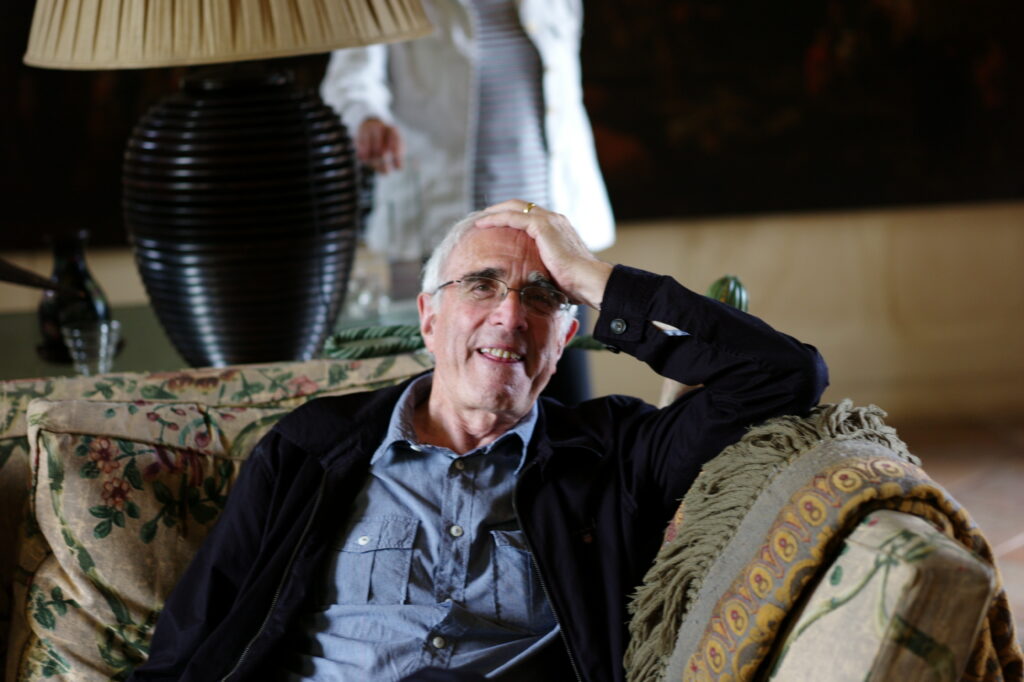 Henry was born in Muizenberg in the Western Cape of South Africa. He qualified as an attorney in Cape Town and by the time he and his wife, Elsa, and young family moved to the UK in 1971, he had already been part of the legal team representing Nelson Mandela, who was then imprisoned on Robben Island, and he had also represented Winnie Mandela and Albie Sachs. Henry maintained a lifelong connection and friendship with those he had represented and supported in South Africa.
Having re-qualified in the UK, he continued to support the anti-apartheid movement by secretly transferring money to South African lawyers conducting political trials. By 1980, he was working with Birkbeck Montagu, an Anglo-South African legal firm providing services to clients who included radical southern African groups. Birkbeck Montague eventually merged with Penningtons and Henry recalled in his book A Lawyer’s Odyssey that when asked by a partner whether he minded that Penningtons acted for the then Conservative Party, he responded “As long as you’re okay with me acting for SWAPO” (Namibian freedom fighters). His reputation as a lawyer in the City was second to none, and he became a partner and was latterly a consultant with Penningtons.
Henry began to discover the mediation movement and latterly family mediation in the late 1970s and early 80s. Initially, he was involved in civil commercial models and was involved in the development of a number of mediation models, including early models for medical negligence. In 1993, he and Arthur Marriott QC co-authored ADR Principles and Practice, considered a seminal text and now in its fourth edition, which Henry edited.
In 1985 he and Jack Bleiman (a fellow South African lawyer settled in the UK) travelled to New York to train with John Haynes (an Anglo-Canadian mediator often referred to as the “father of family mediation”), sleeping on the floor of a friend’s flat for the duration of the course. Henry latterly gave a workshop on “Divorce Mediation” at the Forum for Initiatives in Reparation and Mediation (later Mediation UK), in London, where he met Lisa Parkinson and which led to the eventual pilot project Solicitors in Mediation.
Working with Lisa and four other solicitors – Jack, Diana Parker, Felicity White, and Resolution founder John Cornwell – he established a new model for family mediation, conducted by co-mediators and supporting clients primarily with arrangements for their children post-separation, and latterly with “finance and property in outline only”, as had been agreed with the Law Society. A number of voluntary services, initiated and established primarily by those from psychotherapeutic and social work backgrounds, had sprung up in the late 1970s and early 80s, notably in Bristol, Cambridge and Bromley, and a first national body, the National Family Conciliation Council (NFCC, now NFM) had been formed.
Henry was a career-long supporter of the importance of family solicitors being able to offer family mediation, which he believed was a professional activity that should be known to and encouraged by, if not provided by, all family solicitors.
The Solicitors in Mediation project became what is the Family Mediators Association today, an organisation that Henry was proud to be a Vice-President of with Lisa Parkinson. In 1994/5 he co-presented the FMA’s first course for sole mediators and latterly he and Felicity White co-wrote the first family mediation training for Resolution (then SFLA), other trainers being familiar names to Resolution members, including Suzy Power, Robbie Clerke, Helen Garlick and myself.
Henry was one of the first lawyers to recognise the importance of the psychology of emotions and the links to post-separation conflict, and the importance that all lawyers working as mediators had knowledge, skills and compassion towards separated people. To that end, he enlisted Brenda McHugh and Neil Dawson, consultant psychotherapists with the Marlborough and Tavistock Clinics and founders of The Pears Family School, to bring their knowledge and skills to family mediation training. His fascination with high conflict and post-separation dysfunction also led to his writing and co-presenting a course with Nigel Clarke (see below).
Henry was never still, and always looking for new ways to expand and improve family mediation. In 2018 he wrote (and co-presented with Suzanne Kingston and Karin Walker) the first course in “hybrid mediation”, bringing his knowledge, skills and experience from the civil commercial mediation model to bear in a now-popular model which formalised the involvement of the client’s solicitors in a mediation.
Henry had a worldwide reputation as a mediator, training and speaking to mediators in Hong Kong, South Africa, Iceland and Denmark – and winning numerous awards in the process.
He was one of the smartest and best negotiators I have ever met, was generous with his time and with his knowledge, self-deprecating, modest, a great friend to many and a staunch supporter of good family practice and of family lawyers and mediators. More than that, he was in turn mischievous, stubborn, frustrating, endlessly curious, and a lot of fun. To my knowledge, Henry had been intending to retire since probably around 2000, I’m glad that he never quite got there and I will miss him.
Nigel Clarke, Kent and Surrey Family Mediation
I first met Henry on a training course in London in the late 1990s. I had recently qualified as a family mediator and had much to learn. And we all learned so much from Henry. He made such a positive impression. Apart from his great voice, what shone through was his warmth and generosity.
Whenever a course was promoted with Henry as trainer, the decision to book was easy because you knew it would be interesting. In 2019 I had the good fortune and privilege to work alongside Henry on several occasions, supporting him, sharing his knowledge about high conflict and all things DR. Heny had high standards and I was a bit in awe, but he made the whole process an absolute joy.
When Henry decided to retire in 2023 (although I know he never really did) he suggested grabbing a coffee and when we met he gave me some books. Of course I thanked him for his kindness. But it was only when I got home later that I realised he had written a few words inside each one. That was Henry. Always thinking about others. Of course those books now take pride of place on my shelves.
On 29 May this year, fittingly Ascension Day, I was lucky enough to be invited to attend a celebration of Henry’s life. A poignant day which would have been Henry’s 86th birthday. Many tributes were paid to his very many achievements and, as you would expect, common themes referenced Henry’s good humour (his passion for terrible jokes but always delivered with mischief and absolute fun!) and kindness to all. It was lovely to meet and catch up with some of Henry’s dear family, friends from school and South Africa and the early days of mediation, including Angela, Ruth Smallacombe, Brenda McHugh, Felicity White and Marian Roberts.
I think Henry would have approved. As his dear wife Elsa and children Lauren and Gavin said, you could really feel Henry’s presence in the room, watching over everyone to check they were okay and worrying if he had bought enough croissants. Of course he had.
If we take away just one memory of Henry I hope it will be that we should always try to be kind and try to find the best in everyone. Rest in peace dear Henry. I will really miss your friendship, good humour and kindness. Your legacy is assured in so much of the work we do as family professionals.
Suzanne Kingston, Penningtons
I first met Henry Brown many years ago when I was training to be a mediator. I was struck immediately by his humility and kindness. He was a wonderful trainer and showcased beautifully the skills required to be a good mediator He was always very interested and engaged, taking the time to check in with me to discuss my mediation practice. A few years ago, Henry contacted me and Karin Walker to ask us if we would like to take over the training of hybrid mediation. We undertook the first course with him as shadow trainers – it was typically very generous of Henry to share his knowledge with us and we learned so much from him. Henry was an exceptional human being – thoughtful, compassionate and with a keen sense of justice and fairness.