
The meaning of Resolution: new chair and vice-chair take to the stage
As our new chair and vice chair take to the stage, director of communications Matt Bryant asks Grant Cameron and Melanie Bataillard-Samuel to wrestle with the issues of the day

Grant and Melanie meet near Resolution HQ in London in June 2023
Grant and Melanie, this is the first time we’ve had the chance to speak to you together since you became Chair and Vice Chair respectively at the AGM in May. Now that you’ve had some time to get to grips with your new roles, how has it been going?
Grant Cameron (GC): So far, so good. It’s great to be Chair and to be a part of a really good team. We have already done a couple of Committee days together, and these have helped us make a really good start. I’m really looking forward to working with Melanie, but as I say it’s been a good start for the first couple of months.
Let’s go back to the beginning of your career. Why did you originally choose to go into family law?
GC: When I was at school I did want to become a lawyer. I remember my economics teacher – who was also my careers adviser – he fell about laughing when I told him that. I was actually destined to go into Hotel Management, I had a place lined up at Leeds University, and had done a few months’ stint in a London hotel – which was enough to put me off! But when my A Level grades came in, I managed to secure a place in what was the Polytechnic of North London. I did a straightforward law degree and as part of that that I did a family law elective, from there I went on to law school.
So, why family? Why did you do pursue that?
GC: I had quite an early desire to get involved in family law. Though it wasn’t really until I walked into the office did I realise what a challenging role it was being involved in family work.
Much to my dad’s particular distaste, I really liked the social aspect of certain areas of law, I was drawn to anything that involved people. I generally like having that personal context to my work, so family was one area I was very keen to be involved in.
Very early in my career I became specialised in family, not just by design, it was mostly by accident. When I did my first job as an articled clerk towards the end of my training, my principal went on long-term sick leave. I pretty much inherited his entire caseload and from that point on, that’s really where my discipline has been focused throughout. I’ve got to say I haven’t looked back from that.
And Melanie, how about you?
MBS: At the time, family law wasn’t something that interested me, I actually wanted to become an employment lawyer. It really all came down to the training contract. I couldn’t get a seat in anything that I actually wanted to do, and so I ended up doing more than a year of my training contract in family law. I found that it actually really suited me, and I was surprisingly good at it; clients liked me and I was able to do the work and, most importantly, stick to the hours.
I kind of just learned to love it. After a while of working in family law, you understand it and you realise you’re helping people and making a difference to their lives. I couldn’t think of doing anything else, it just makes no sense to practice anything else but family law.
Melanie, tell us about how you got involved in Resolution, and why do you choose to give up so much time for the organisation?
MBS: I can’t imagine not being a part of Resolution – it really does go hand-in-hand with my day job. When I was training, everybody had to be a member of Resolution. If you were in the Family Team, you had to be a member of Resolution. I was really automatically enrolled into it.
During my career I have moved around a lot. I’ve worked in different parts of the country. No matter where I have lived and worked, the one constant for me has been Resolution.
Being an active part of Resolution helps me understand what’s going on in the family law world and what is going on in my area. As my career progressed, I found that I just got more involved in the organisation because it was becoming an anchor to my work life.
My activity with Resolution now all comes down to wanting to do more to help others because I found Resolution so useful when I was progressing in my career. It’s very much me giving back to my community of lawyers, therapists, divorce coaches and IFAs, and whoever else I’ve had the pleasure of working with throughout my career.
Grant, you’ve been involved with Resolution for quite some time now, how did that come about? How did you first get involved?
 GC: I couldn’t really imagine my day job without it going hand-in-hand with belonging to Resolution. It’s very much part and parcel of who I am and the way that I practice.
For me it goes back to the SFLA days. Initially I joined because a lot of my peers had done so, and it was the organisation for family lawyers to join. In those days it was very much a place where family lawyers would meet and network and benefit from training.
In my early days I went to the occasional event and touched base with the organisation. I didn’t really get too involved until I joined the West Sussex Region. I had joined a firm in the area at the same time that the Regional Committee had got very, very stale. There was a bit of a move to reinvigorate it. All of a sudden the Chair resigned and nobody stood up to replace them as Chair. So by pure default, I became Chair of the West Sussex Region. It was in that role that I became more exposed to the Regional Liaison Committee and my role with Resolution sort of grew from there.
What do you think have been the biggest changes in the profession, and also within Resolution since the time you joined?
GC: For me, the Code of Practice has been central to me from my SFLA days but what has really changed is how we have started to adopt a much more holistic approach involving all sorts of other professionals. This is adding so much to our roles and, from a client’s point of view, this approach to practice is a huge benefit.
To see how Resolution has really promoted this and encouraged so many different ways of approaching a problem – really putting children and families at the centre of it all – for me, that’s been a real big sea change in my time.
MBS: Obviously no-fault divorce has made a huge difference to family law. The way we work with divorce coaches and financial advisors, counsellors and therapists, and, all of the other aspects of family law, simply did not happen when I started.
With regards to Resolution, it has become so much more prominent in so many other family lawyers’ ways of working. I have been on the National Committee for some six years, and have seen a huge change in that time. Change that is always for the better. The way Resolution has become so much more businesslike – in a good way – has made the organisation a lot more settled, prepared and defined.
How would you say that Resolution has contributed to your career progression and success?
MBS: For me, Resolution has helped me be the solicitor I am today and to set up my own practice. I think being involved in Resolution has always created a support network wherever I’ve been. Resolution has also helped to raise my profile. I’ve made amazing connections that have helped me network with other family law professionals and find firms that I want to work with.
When I have changed jobs I’ve been able to find people through Resolution. I also found that when I started my own practice, it was only possible because I had met so many people through Resolution who provided me with huge amounts of encouragement, guidance and support.
GC: I’ve met people who, in just the normal course of events, I just wouldn’t have met. I’ve always made it very clear on my CV that Resolution is very much part of the way I practice and I genuinely believe that this has made potential employers keen to interview and recruit me.
Not only has Resolution membership helped me get a foot in the door of potential employers, but it has given me exposure to other bodies of professionals that I just don’t think I would have met, like having bi-weekly meetings with the President.
Grant, your time becoming chair was slightly delayed as a result of COVID. There has been a lot of focus on the challenges that came about as a result of the pandemic. Do you think there has been anything positive that’s happened in family practice that might not have otherwise taken place?
GC: We have now got greater transparency, and I don’t mean just meeting with the President, but we’ve got other professionals within the family law world coming together to talk honestly about the issues facing public law professionals. You hear from both sides of the bench now and it does give a different perspective.
I really value that openness and I think it will help us to make the government’s jobs easier by doing things in a different way; utilising the IT and systems that are available to us in a better way. This all impacts how we can help our clients to make sure that they’re getting information that’s more usable and adaptable for them.
And Melanie, do you think there’s been some positive coming out of the pandemic?
MBS: Definitely. I’m a French national and I do a lot of work with French clients. During COVID, all the proceedings that were scheduled in France stopped, and that was it. When things started again, hearings were delayed for up to four years. It’s a testament to us, really, that we were able to carry on and muddle through. Of course, we had issues, but we tried. Everybody was pulling in the same direction, whether it was the judges, the clerks, the solicitors and the barristers, we were all trying to make it work however we could. That has, to a certain extent, still carried on today.
A lot of countries just weren’t able to do that and a lot of family law systems collapsed during the pandemic. I’m so impressed that we carried on going. That for me is a real positive.
GC: I’d agree there was a real collegiate sort of attitude and colleagues started to look out for one another, whether it be from other law firms or even checking in with the judiciary, with our other professionals.
Wellbeing is something very close to Melanie’s heart, but that suddenly became focused on as well. As professionals, the pandemic reminded us that we all have lives outside of the family law world.
Melanie, as Vice Chair you are also Chair of the Regional Liaison Committee (RLC). Based on your experience what do you think is the key to having a successful and thriving resolution region?
MBS: What gets the members thriving is communication and contact. It’s all about speaking regularly; whether it’s webinars, seminars or hosting conferences, social drinks or meeting online, whatever it is you are doing, it’s so important to have continuous open dialogue.
I would also add in the importance of perseverance. Grant and I went to the Devon conference last month and spoke to several members about how well attended the event was. They told me that 10 years ago the Regional Committee was on the verge of shutting down. Now they are thriving; and that is because of all the effort they have put into hosting events, running conferences and doing a range of things that members in that area want and need. It just shows how important it is to just keep going.
GC: I want to really emphasise that word “perseverance”. It doesn’t matter if you have just a handful of people coming together as a committee, or that your first event has just a few attendees. Getting your first event off the ground, that’s the true sign of success. To be able to pull people together and get them to turn up to your event leads to word of mouth, so even more people start to get involved.
I’d also encourage you to make sure that you go to the various RLC meetings. If you’re not a thriving region, it’s easy to think it isn’t working and simply give up, but when you hear from other regions, you’ll be inspired by their success stories, and their tips about how they’ve persevered.
My message to anyone reading this would be why don’t you give it a go? Think small and don’t feel like you have got to sort of conquer the world.
Our specialist and regional committees are looking for new members all the time, what would your message be to someone thinking about applying to join a committee? It’s a big commitment and it has a big impact on their day job as well.
GC: It is a big commitment, but every member has a voice within this organisation. If you believe in this organisation, if you want to make a change in the family law world, what better way to do it than to get involved in Resolution and be a part of a committee.
The committees are a great way to really feel like you’re making a difference to the future of our profession. It gives you an opportunity to learn more about a field that you’re really interested in and that you’ve got a real passion for; that you want to see change, or you want to see grow and develop.
MBS: If you get involved, you will see how things work. You get involved in preparing meeting ideas, coming up with policies and changing the landscape of family law. I can’t stress just how much you will get from it. You’re helping your colleagues, you’re helping yourself, you’re helping your clients. It’s brilliant!
Yes, it’s time consuming, but it’s incredibly rewarding; not only is it personally rewarding, but it’s great for your career progression. It introduces you to different people and to different ways of thinking. Being part of a committee helps you become a better family law professional.
Melanie, you’ve been a real pioneer of the Wellbeing Committee. The pandemic helped highlight the importance of wellbeing, but just how big an issue was this before COVID, and why do you think there’s so much focus on wellbeing at the moment?
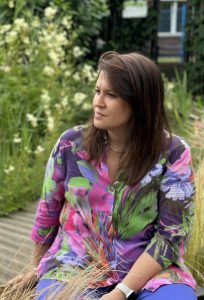
Melanie Bataillard-Samuel
MBS: I think wellbeing has always been an issue, but we just didn’t talk about it. You were made to feel like, that if you dared to grumble somebody higher up would roll their eyes and tell you to get on with it. I think post-COVID, we all suddenly had to check in on each other because it was so serious – not just for our physical health, but our mental health too.
The pandemic moved us into a world where we discovered that we could work in different ways and we started to understand the importance of taking time to look after yourself. All of a sudden this opened up the important conversations we all needed to have and the premise of wellbeing remits really became apparent.
What is great, is that you have junior lawyers really leading the charge on wellbeing. We are seeing a lot of young lawyers having second thoughts about their job, which has made those in managerial positions think about what they should be doing to support their junior lawyers and ask the hard questions in order to make work a pleasant environment and attractive for young people.
Having one particular focus is especially difficult. The Wellbeing Committee has discovered that there is just too much to be looking at. For the Committee, the immediate focus is about understanding the ways that people have found of coping, and the ideas that work for them to be able to disseminate them to the membership and the family law world.
From a Chair’s point of view, Grant, why should we be focussing on wellbeing?
GC: For me it’s front and central. When I look back to the member survey we conducted a few years ago, some of the results from that were quite shocking – a lot of junior lawyers were telling us that they were ready to quit! I thought these were the people we’re pinning our hat on as the lawyers of today and the leaders of the future! Suddenly they were telling us that they want to do something completely different and that was really sad to read.
I’m really glad that our YRES members have grasped the nettle and are the ones forcing change. It is not a bad thing that senior managers are now having to think about listening to what you have to say and realising that we can no longer just use wellbeing as a strap line. We must now start to develop ideas and strategies so that junior lawyers and senior lawyers are enjoying their work.
You’ve both got busy day jobs and your new Resolution commitments. How do you manage to keep a good work/life balance? What is it that you do outside of work to relax?
GC: I make a fairly half-hearted attempt to regularly go to the gym. Once I’ve done that, I then go home to two very young, but very boisterous dogs who need a lot of walking. I think it’ll probably be the dogs and my family; they all require me to be fairly active in different ways and that helps to take me away from the day job.
I also get involved in the village amateur dramatics group. I’ve held various sorts of mostly ridiculous roles. Whether I’m in pantomime at Christmas, or whether it’s something a bit more theatrical in the spring, it helps to take you out of yourself. I’ve got to say that has been a good pressure reliever for me.
MBS: As Chair of the Wellbeing Committee I should be better at looking after my own wellbeing, but most of my downtime is spent doing family law-related things. Be it doing a podcast or travelling around to see family law colleagues, or having a read of the latest updates in family law, I guess everything I do is all family law-related. Perhaps that could be the curse of running a business and being part of Resolution – I have a whole load of family law things on the go at the same time.
I guess if I really want to switch off I go to the theatre or cinema, or go and see a wrestling match, because then I am forced to shut down and have no distractions, I have to just sit and watch.
Later this year we’ll be launching our Vision for Family Justice, which sets out the changes our members want to see in order to make the family justice system more reflective of our Code and our values. What’s the one government policy you’d like to see changed or introduced in order to make that happen?
MBS: Funding for early legal advice. I think anybody who’s done anything for legal advice will know just how important it is to get that advice early on to their clients. Put simply, it can help us and our clients resolve matters quickly and help avoid the need to go to court.
If we can get early legal advice, we can help resolve a lot of problems. We can help dial down the pressure and the stress and we can keep people out of court.
GC: I had two things in mind: one was early legal advice, and the second was cohabitation reform. So let’s go with cohabitation reform. We are crying out for it. We are seeing clients come to us in a situation where the law simply isn’t fit for purpose, and you’ve got some real inequalities that result from it.
The current law isn’t good for many people and their families. It’s unhelpful and antiquated. There has been so much debate over the years as to how the law could change, or should change, and if on our watch we could really move cohabitation reform forward, that will be a terrific achievement.
What are your priorities for Resolution and for our members, during your time at the helm over the next few years?
GC: In terms of the wider family law perspective, it is great that we have now got a much more holistic way of working. I see the continued involvement of many parties coming together and talking about de-siloing our processes. Being able to make every part of our profession more accessible, more understandable, and intelligible for the clients is so important. It’s key that we continue to make sure that our clients understand that there are options available to them and that we are able to work together.
Being able to work with other professionals is constantly being developed, but in the next two years I am excited to see how that can continue to be evolved and developed so that all professionals are working in a cohesive way together for the benefit of our clients and the benefit of their families.
MBS: Looking internally into the membership of Resolution is vitally important. One of the things I want to be more involved in is to try to get out and visit more of our committees and our regions – I think that’s something we both feel strongly about. I really would like the regions to feel more involved and to participate more in our Central activity and for them to have that immediate connection. I want to help our Regions to grow and to get them to expand to get more members involved.
I would also like to see a lot more non-lawyers joining Resolution and being part of the organisation. It is so important to have all the professionals who are going to be helping our clients to be on the same page with regards to how we work.
What do you think the future holds for Resolution? How do you think we ensure that we remain the essential home for family justice professionals over the next 40 years?
MBS: I think we need to welcome absolutely everybody and anybody who is a family law professional. We need to be welcoming them with open arms and find a way of offering them what they need, what they want, and to help and support them in getting involved in Resolution.
If we’re all working together with the same mindset, Resolution will continue to go from strength to strength. There is a real need for an organisation like Resolution, one that has a specific mindset about how to work with other lawyers, family law professionals and our clients.
GC: I think for me it’s all about keeping relevant. We have to keep the Code front and central. If I think about our history, about the 31 professionals who wanted to make a difference and have an impact on the family law world and how that then evolved and how people really got captured in their vision, we have to keep this enthusiasm alive and we can only do that by keeping it relevant.
There really is no other organisation like Resolution. We stand out because we have so many elements to what we do: the lobbying arm, the educational arm, the networking provision that is so valuable to each and every one of us in our career, there’s so many elements our members can benefit from. Now we need to make sure we remain there, but also think about what our members need so we remain relevant today and into the future.
Speaking of staying relevant there has been a lot of talk about artificial intelligence (AI) and specifically how it may change the profession. What do you think we should be looking out or preparing for? Do you think there’s anything positive that may come from the introduction of AI?
GC: I think AI has its place, but – and it is a big but – family law is about people. At its very heart are individuals, couples and their family. No form of AI is ever going to have that sort of interpersonal contact. Emotions run high when a couple are going through separation or divorce and you can’t pretend that doesn’t exist.
If the emotional support isn’t there, if it’s all dealt with by logarithms and computer programmes, we won’t actually get to the fundamental issues. So, while I agree that AI does have a place, I don’t think the revolution is going to be quite as spectacular as some might be suggesting. At the end of the day, everything we do comes back to personality, and that interpersonal connection is key.
Melanie, does AI worry you? What do you think we should be looking out for?
MBS: I mean, obviously, I’m worried about Skynet, but I don’t think we’re there yet! Undoubtedly AI will be helpful for certain things. I think we will be able to harness it for drafting documents, perhaps preparing position statements, plans and structures – menial things like that, but I don’t see that you can get rid of judges, I don’t see you can get rid of lawyers, I don’t see you can get rid of your paralegal support staff, because you will still need to have that human element.
More importantly, I don’t think AI will be able to understand how to keep families out of court and help them reach a decision that is going to make the family structure work, which is what we do effectively. I think we will be able to use AI to help our workload, which will then have a great effect on our wellbeing. So, ultimately, used in the right way AI could be a positive, but we’re definitely not there yet.
So, we’ve talked about the Chair and Vice Chair working together and being a real team. But what are the qualities you both admire in each other? 
MBS: Grant has always been incredibly friendly. When I first joined the National Committee he was always making an effort to have a chat and see how things were going.
As Chair he remains incredibly approachable and he is always interested in what people have to say. Grant is always there to listen and he’s always there to reassure you that, if you have any issues, he will be dealing with them. He’s incredibly supportive and he is a great figurehead for Resolution.
GC: This is the easiest question that you have posed. Melanie is just a thoroughly nice person. But what I really admire is her dedication, her commitment and her passion for all things family law.
The fact that Melanie has been running her own practice so successfully in a relatively short period of time comes as no surprise. Somebody who is that passionate about their work is always going to be a success. It’s the same with everything that she gets involved with in Resolution.
Melanie is a great encourager and a great supporter, and she wholeheartedly believes in this organisation and the work that we do.
Amateur dramatics and wrestling aside, I wonder if you can tell each other one thing that the other doesn’t already know about you?
GC: I do have one more ridiculous thing. What Melanie won’t know is that once a year I don a train driver’s outfit and I drive Thomas the Tank Engine around and around for four solid hours at the local village fete.
MBS: I hear that The Review is going to be coming out in full colour from now on; maybe we could organise to have a picture of the Chair in his outfit!
It’s your turn, Melanie. What’s one thing about you that Grant doesn’t know or doesn’t know yet?
MBS: I think Grant and I have had so many discussions where I’ve told him absolutely everything. One of the things I might not have mentioned is that I’m a big fan of the circus. I will travel the world to go and see circus shows. This September and October I am planning on seeing all of the circuses in France. I’m talking about the acrobats and the trapeze artists, the tightrope walkers and the ones who can juggle downwards rather than upwards, and those guys and girls that can hold four people on their shoulders – those feats are like amazing professionalism. You sit there thinking “how do they do these sorts of things? This is absolutely amazing!”
There might be someone reading this interview today who is at the beginning of their career, or who has perhaps just joined Resolution. What’s the one piece of advice you would give them regarding their role in Resolution?
MBS: I would say you will get so much out of the organisation if you get involved. Whether it is regional or part of a specific committee, meeting up with your colleagues or attending training, just get involved with the organisation because you will get so much from it.
GC: I’d also say don’t be intimidated. If you’re a junior member, get into YRES because it is such a great place for younger professionals to meet and to have a say, network and grow up together throughout their career. It really does provide that natural home for those relationships to evolve and develop. Being fully immersed in Resolution will allow you to create lifelong friendships. As Melanie said, you will get out what you put in so just get involved in whatever way you feel comfortable, but don’t be daunted or put off – we’re here to support you.